Water Based Wood Floor Finish Lynn MA: A Complete Guide (Performance, Brand Differences, Sanding Quality, and Pro Results)
Water Based Wood Floor Finish - Water-based (waterborne) wood floor finishes have become the go-to choice for many homeowners and flooring pros because they deliver clearer color, faster dry times, and lower odor/VOCs than traditional oil-based polyurethane. But “water-based finish” isn’t one product category with one level of quality—there are major differences in durability, application characteristics, appearance, and forgiveness depending on the finish chemistry, whether it’s 1‑component or 2‑component, and the brand’s specific formulation.
This guide covers what water based wood floor finish are, how to choose the right system, how sanding quality affects the final result, and how different brands tend to differ in characteristics (without pretending every line within a brand behaves the same).
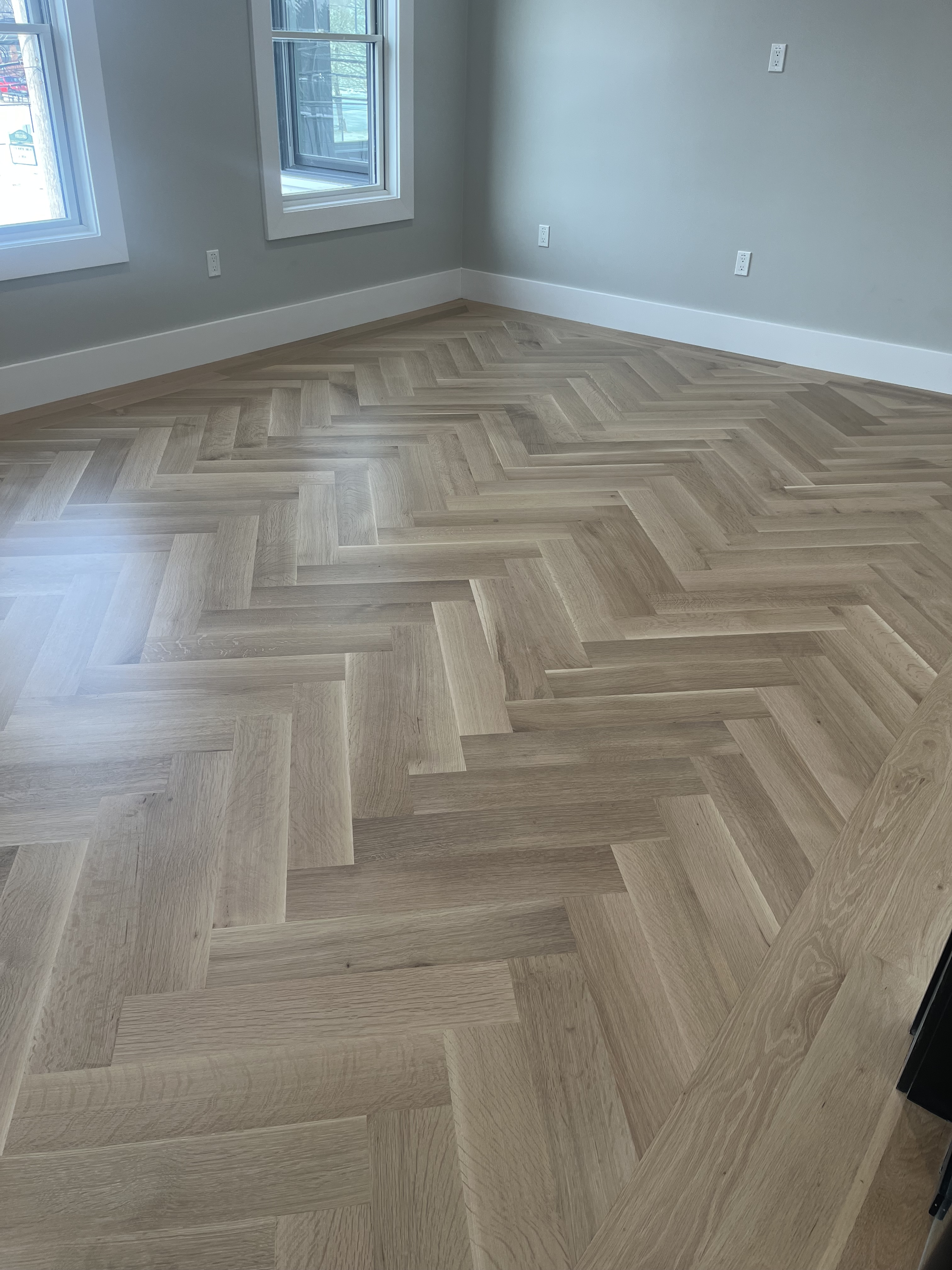
1) What is a water based wood floor finish?
A water based floor finish is a coating that uses water as the primary carrier. After application, water evaporates, the film forms, and the resins cure into a protective layer. The most common families you’ll hear about are:
- Waterborne polyurethane (very common in premium/pro products)
- Waterborne acrylic / acrylic-urethane blends (often more economical, sometimes softer)
- 2K (two-component) waterborne finishes (a crosslinker/hardener is added for higher performance)
Why people choose water-based finishes
- Clearer look (less ambering) than oil-based polyurethane
- Faster recoat windows (many systems recoat in a few hours)
- Lower odor and often lower VOCs (varies by product and region)
- Great option for modern styles, especially white oak and light stains
Tradeoffs to understand
- Can be less forgiving of dust, debris, and application marks because they set faster
- Some are more prone to showing micro-scratches depending on sheen and resin hardness
- Color can appear cooler vs oil-based poly (which warms/ambers)
2) Water based wood floor finish types: 1K vs 2K (this is a big divider)
1K (one-component) waterborne finishes
These are ready to use out of the container.
Typical strengths
- Easier to apply
- Longer pot life (since there’s no hardener)
- Often more DIY-friendly
Typical limitations
- Generally lower chemical/abrasion resistance than premium 2K systems (product-dependent)
2K (two-component) waterborne finishes
A crosslinker/hardener is added. This changes performance and application behavior.
Typical strengths
- Higher durability (abrasion and chemical resistance)
- Better for high-traffic homes, pets, and commercial/light commercial use
- Often better stain resistance and faster cure-to-service times
Typical limitations
- More expensive
- Pot life matters (you must use within a time window)
- Application is less forgiving—process control matters
3) Key performance characteristics (what to compare)
When you compare water based floor finish across brands/lines, focus on these:
Appearance & color
- Clarity (how “water-clear” it stays)
- Warmth/ambering (some waterbornes are intentionally warmer)
- Grain “pop” (how much depth it adds—often influenced by sealers and system choice)
Application behavior
- Flow and leveling (how well it smooths out roller lines/t-bar marks)
- Open time (how long it stays wet enough to work without lap lines)
- Foaming tendency (some finishes foam more if overworked)
- Edge blend (how easily you can maintain a wet edge in big rooms)
Durability & protection
- Abrasion resistance
- Chemical resistance (cleaners, alcohol, mild solvents, etc.)
- Scratch visibility (harder films can show fine scratching depending on sheen)
- Stain resistance
- Cure time to rugs/furniture/heavy traffic (varies widely)
Repairability
- How well it responds to screen & recoat
- How “patchable” it is without witness lines (system-dependent)
4) Brand differences (what varies in the real world)
Important: most major brands offer multiple lines (economy → premium). So it’s more accurate to compare tiers than to say “Brand X is better than Brand Y.”
A practical way to think about “brand quality tiers”
- Consumer/big-box waterbased polys: often lower solids, shorter open time, less leveling, lower durability
- Professional 1K waterborne: better flow/leveling, stronger film, more consistent outcomes
- Professional 2K waterborne: highest durability and chemical resistance; best for heavy traffic
Common pro brands you’ll see (examples)
Depending on your market, pros often work with brands such as Bona, Loba, Pallmann, Basic Coatings, Berger-Seidle, and others. Each has:
- specific sealers for color control (e.g., “natural” vs “amber/warm” looks)
- different rollers/t-bars and application specs
- specific compatibility rules around stains and reactive color systems
What tends to differ between premium pro lines
- Better leveling (reduces roller texture)
- Better edge melt-in (reduces lap marks)
- Higher chemical resistance (especially 2K)
- More predictable dry/recoat windows
- Better technical documentation and system support
If you’re choosing between brands, a smart move is to compare:
- whether you’re using a 1K or 2K
- the recommended sealer system
- recoat/cure requirements
- known sensitivity to humidity/temperature swings
5) Sanding quality: the hidden driver of water based wood floor finish success
Water-based finishes are honest. They don’t hide much.
Sanding defects that water-based finishes reveal
- Edger swirls (especially visible in satin/matte at raking light)
- Chatter marks from drum/belt sander
- Picture framing (edge zone looks different than the field)
- Uneven scratch pattern leading to uneven stain absorption
- Poor flatness leading to inconsistent sheen and reflections
Why sanding matters even more with water-based systems
Waterbornes can have higher clarity—so scratches and swirls are easier to see.
- Faster set time means you can’t “work the finish” as long to disguise issues.
- Many modern aesthetics (white oak + clear finish) are less forgiving because the look is clean and minimal.
Bottom line: The best water-based finish in the world can’t fix a sanding problem.
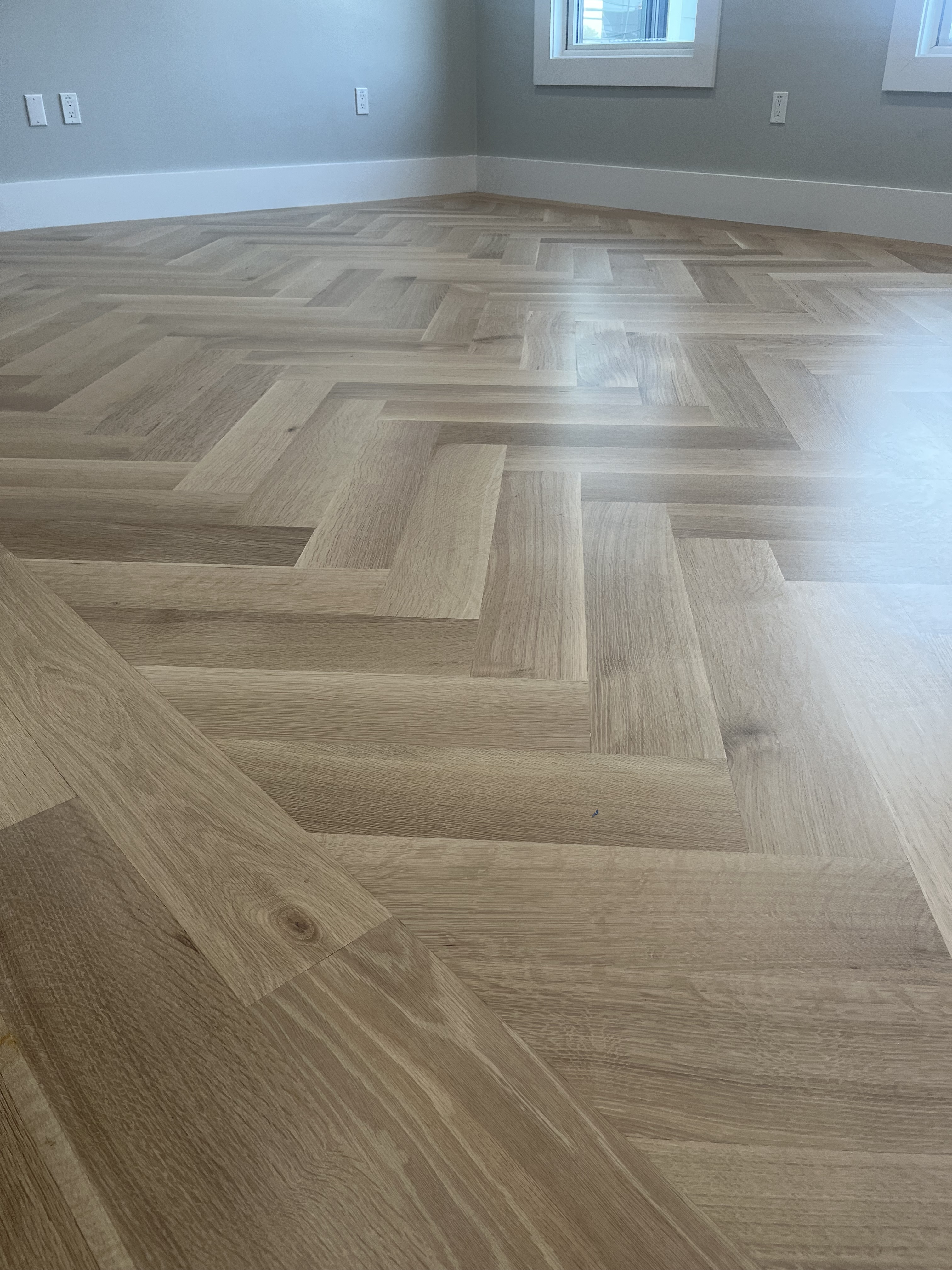
6) Stain + water based floor finish: preventing bleed-back and color pull
One of the most common technical complaints with water-based topcoats over stain is stain bleed-back (color movement into the first coat) or color pull.
What usually causes it:
- Stain not fully dry/cured (especially in cool/humid conditions)
- Too much pigment left on the surface (insufficient wipe-off)
- Overworking the first waterborne coat (scrubbing it in)
What reduces risk:
- Tight control of stain dry time (especially at edges/toe-kicks)
- Using the recommended sealer step in the system (when specified)
- A disciplined first coat application (smooth, minimal overworking)
7) Choosing the right sheen (and why sheen affects “scratch visibility”)
- Gloss: shows reflections and surface texture; can highlight application marks
- Semi-gloss: still reflective; durable look but shows more imperfections
- Satin: most common; balance of realism + cleanability
- Matte/extra-matte: hides some glare but can show burnishing patterns in heavy traffic depending on product
Scratch visibility is not only “durability”—it’s also how light interacts with the surface. A very hard finish can be extremely durable and still show fine micro-scratches in certain lighting if the sheen and environment make them visible.
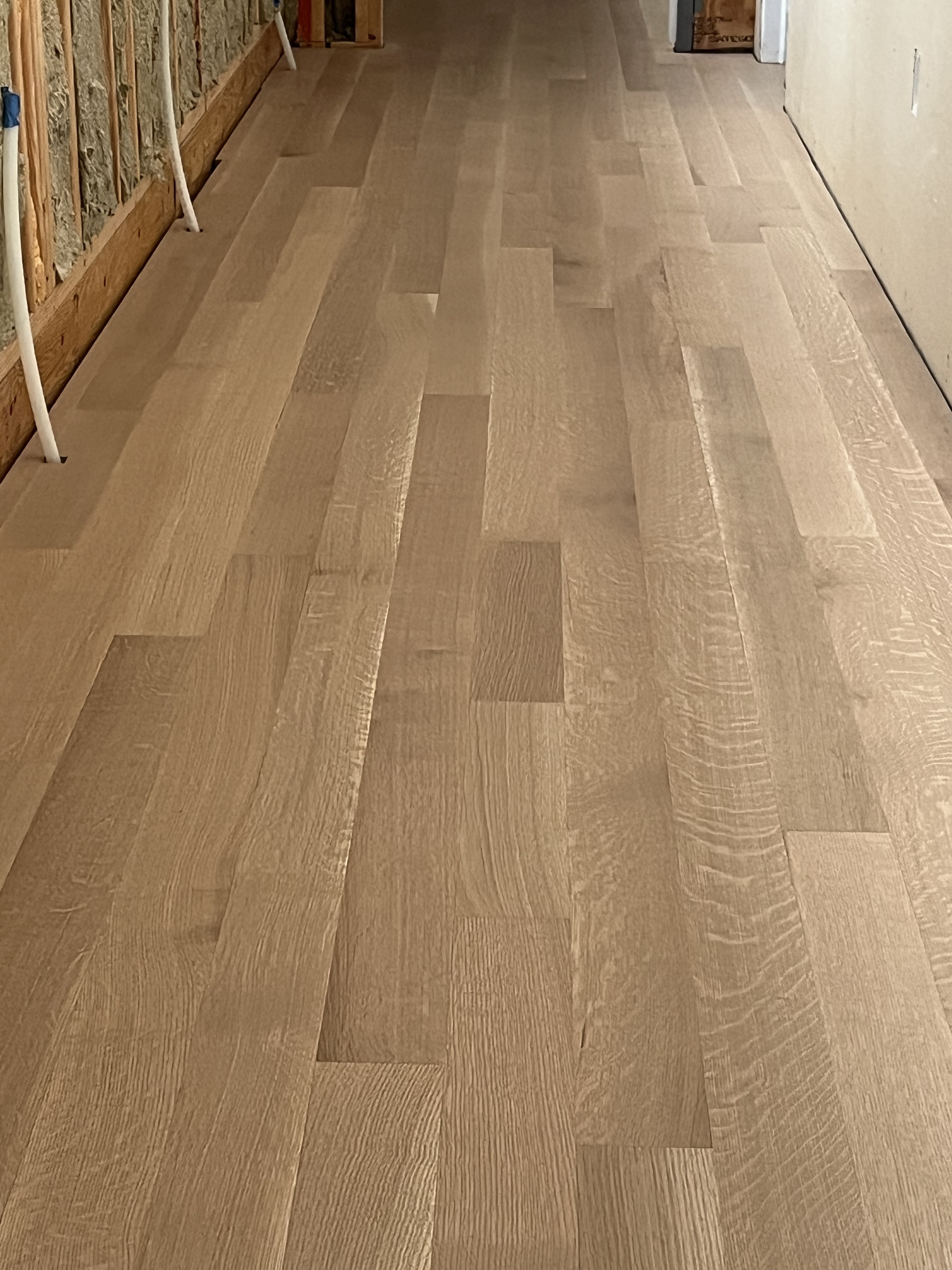
8) Jobsite conditions: temperature, humidity, airflow
Water-based finishes are sensitive to environment:
- High humidity can slow dry/cure and increase dust nib risk (film stays tacky longer)
- Low humidity + high airflow can cause fast set, lap lines, and dry edges
- Hot floors (sunlight) can accelerate set and create overlap marks
A professional outcome usually comes from controlling:
- temperature range
- humidity (often dehumidification in basements/coastal climates)
- airflow that’s enough for drying but not so aggressive it blows debris into wet finish
9) The “system” approach: sealer + finish matters
Many pros use a sealer coat under the final waterbased coats to:
- control color (natural vs warmer tone)
- reduce tannin issues on some species
- improve flow/leveling and uniformity
- reduce stain interaction risk (depending on system)
If you want a specific look—especially on white oak—your finish outcome is usually determined by the combination of:
1) sanding quality
2) stain/dye (if any)
3) sealer choice
4) topcoat choice and sheen
Resource: NWFA.org
10) When to bring in a pro for water based wood floor finish
Water-based systems can produce an outstanding result, but they’re less forgiving when conditions or details get technical. Consider hiring a pro (or at least getting an on-site assessment) if you have:
- Dark stain + water-based topcoat and you want a flawless, even look
- A home with humidity challenges (coastal basements, musty spaces, seasonal swings)
- Tight areas like built-in cabinets/toe-kicks, islands, or complex layouts
- A need for 2K commercial-grade durability (pets, heavy traffic, rentals)
- Any prior issues: peeling, adhesion problems, stain bleed-back, lap lines
If the outcome has to be “one-and-done,” professional sanding and a system-matched waterborne finish is usually cheaper than correcting a failed finish later.
G & S Floor Service
Call/text 781-632-1018 or Email
Bona Traffic HD (Lynn, MA )
Bona Traffic HD is a 2‑component, water-based polyurethane floor finish used by many pros for high-durability hardwood floor jobs. It’s popular when homeowners want a tougher finish, low odor, and a clearer (less amber) look than oil-based poly—especially on white oak and lighter stain colors.
Why people choose Traffic HD
- High wear resistance (great for busy homes, pets, rentals)
- Fast turnaround compared to many traditional systems (varies by jobsite conditions)
- Clearer tone than oil-based poly (less yellowing look)
- Available in multiple sheens (e.g., Satin / Semi‑Gloss / Gloss; availability varies)
What matters most for a good result
- Sanding quality (swirls and edge marks show more under waterbased finishes)
- Dust control during sanding and coating (waterbased coats can telegraph debris)
- System compatibility (stain/sealer/finish schedule should follow Bona’s current TDS)
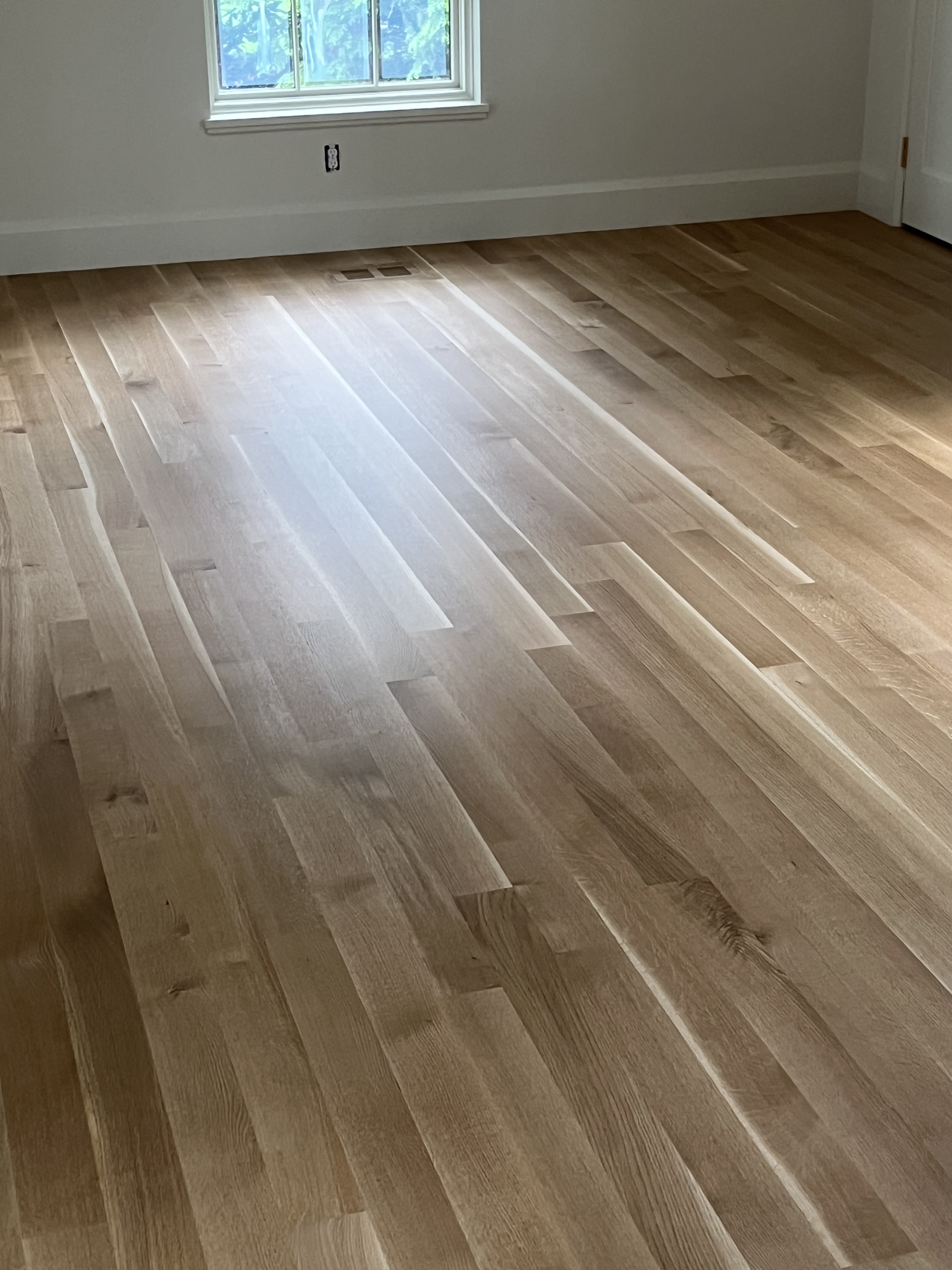
Finding a water based wood floor finish contractor in/near Lynn, MA
+ Boston and vicinity who applies Bona Traffic HD
I can’t see live local availability from here, but you can reliably find and vet a qualified Traffic HD contractor with the steps below.
1) Fastest ways to find the right pros (local + product-specific)
- Bona “Certified Craftsman” / contractor directory: search for pros who regularly use Bona systems (often the quickest route if you specifically want Traffic HD).
- NWFA (National Wood Flooring Association) Pro Search: helps you find established hardwood pros by area.
- Google Maps / local search: use searches like:
- “Bona Traffic HD floor refinishing Lynn MA”
- “water based polyurethane hardwood floors North Shore MA”
- “dustless hardwood floor sanding Lynn MA”
2) What to ask (so you get a true Traffic HD-quality job)
When you call, ask these exact questions—good contractors will answer clearly:
- Do you regularly apply Bona Traffic HD (2-component)?
- What Bona sealer do you use under Traffic HD (and why)? (Common sealers are chosen for “natural” vs warmer looks.)
- How do you prevent stain/finish issues (lap marks, bleed-back, edger swirls)?
- What’s your dust-control setup during sanding (vacuum-assisted sanding / containment)?
- What’s your cure-time guidance for socks, furniture, rugs, and pets?
- Are you insured, and can you provide a written scope (sanding system, coats, sheen, exclusions)?
3) Red flags (save yourself a callback)
- “We don’t need to discuss sealers/system steps—Traffic is Traffic.”
- Vague answers about dust control (“It’s basically dustless, don’t worry.”)
- No written scope, no clear cure-time plan, or no explanation of how they avoid edge swirl marks.
4) One local option you already have
If you’re looking right in Lynn: G & S Floor Service (Lynn, MA) — 781-632-1018.
Contact
G & S Floor Service Lynn, MA
+ Boston and vicinity
Call/text 781-632-1018 or Email
Gandswoodfloors professional development - About us



Anti Spam Policy - Copyright - Linking - Privacy - Terms - Website Disclaimer
Copyright 2026. All rights reserved gandswoodfloors.com
Contact:
G & S Floor Service - Sye Phommachanh
Lynn,Ma. 01904 - Phone: (781)-632-1018