Polyurethane wood floor finish Lynn MA
What is a polyurethane wood floor finish?
A polyurethane wood floor finish is a clear protective coating applied over raw wood (or stained wood) to create a durable wear layer. Understanding how polyurethane behaves—how it dries, cures, levels, and reacts to jobsite conditions—helps you get a smoother result and avoid common problems like lap marks, bubbles, debris nibs, and adhesion issues.
What makes one polyurethane “better” than another?
Most finishes share similar core components (resins, solvents/water carrier, driers, flow/leveling agents, and matting agents for satin/matte). The differences between manufacturers (and between product lines within the same brand) come down to resin quality, solids content, dry/cure profile, leveling behavior, and how forgiving the finish is during application.
> Important note (terminology): In flooring, people often say “polyurethane” vs “urethane.” In practice, many modern floor finishes are urethane-based coatings. The more useful distinction for homeowners is usually oil-modified polyurethane vs waterborne finishes vs moisture-cure urethanes—because those categories behave very differently in odor, dry time, color (ambering), and durability.
Ready to Upgrade Your Floors in Lynn, MA (Boston & Vicinity)?
If you want floors that look great and hold up long-term, start with a contractor who prioritizes the details that matter: proper prep, clean workmanship, and a clear plan from day one. G & S Floor Service is based in Lynn, MA and proudly serves Boston and vicinity with professional flooring solutions for homeowners who don’t want guesswork or shortcuts.
We’ll help you choose the right system for your space, timeline, and budget—and deliver a finished result you can feel confident about.
Call G & S Floor Service at 781-632-1018 or email to request a quote or schedule an on-site visit. The fastest way to get started is to share your town, approximate square footage, and your goal (install, refinish, epoxy, or polish).
Key characteristics of oil-based polyurethane (oil-modified)
Oil-based poly is popular because it’s durable, self-leveling, and relatively forgiving during application.
Typical characteristics (product-dependent):
- Dries by solvent evaporation
- Cures by oxidation (it hardens over time, not instantly)
- Ambering: warms/yellows the wood tone and continues to amber with age
- Sheens: matte → satin → semi-gloss → gloss
- Odor: moderate to strong during application and early cure
- Dry times: often dry to touch same day/overnight; full cure can take weeks
- Top-down cure: can feel dry before it’s fully hardened—be cautious early on
Benefits of polyurethane wood floor finish
Sanding quality matters more than the brand
Even the best polyurethane can’t hide:
- edger swirls
- chatter marks
- uneven scratch pattern
- debris left behind from poor vacuum/tack
If you’re staining, sanding quality matters even more—stain will highlight scratches and edge differences.
Rule: If your sanding isn’t clean and consistent, fix sanding first. Don’t try to “poly your way out of it.”
How to apply oil-based polyurethane wood floor finish (clean, repeatable process)
Always follow the manufacturer label + SDS. Techniques that worked 20–30 years ago may not work the same with today’s formulas and VOC rules.
Step 1: Prep and sample
- Floors should be sanded, vacuumed, and tack-clean.
- Test a small area (or use scrap) to confirm appearance and to check for issues like beading or contamination.
Step 2: Control conditions
- Keep temperature stable (many pros aim roughly 65–80°F).
- Avoid strong airflow across the wet finish (it can carry dust into the film).
- Don’t shake finish (stir gently to reduce bubbles).
|
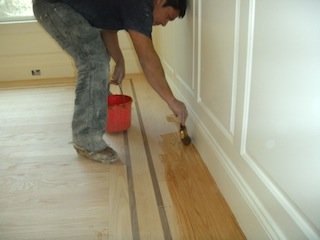
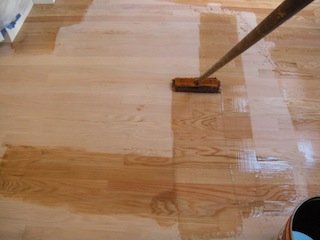
Step 3: Apply with the right applicator Common pro tools:
Big success factor: maintain a wet edge and don’t overwork the finish. Extra back-and-forth strokes thin the film, shorten open time, and increase lap marks. |
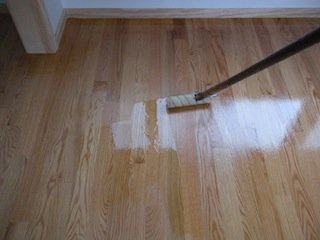 Applying polyurethane with a mohair roller Applying polyurethane with a mohair roller |
|
Step 4: Abrade between coats (not after the final coat) Between-coat abrasion options (choose one system and do it consistently):
Vacuum and tack thoroughly before recoating. |
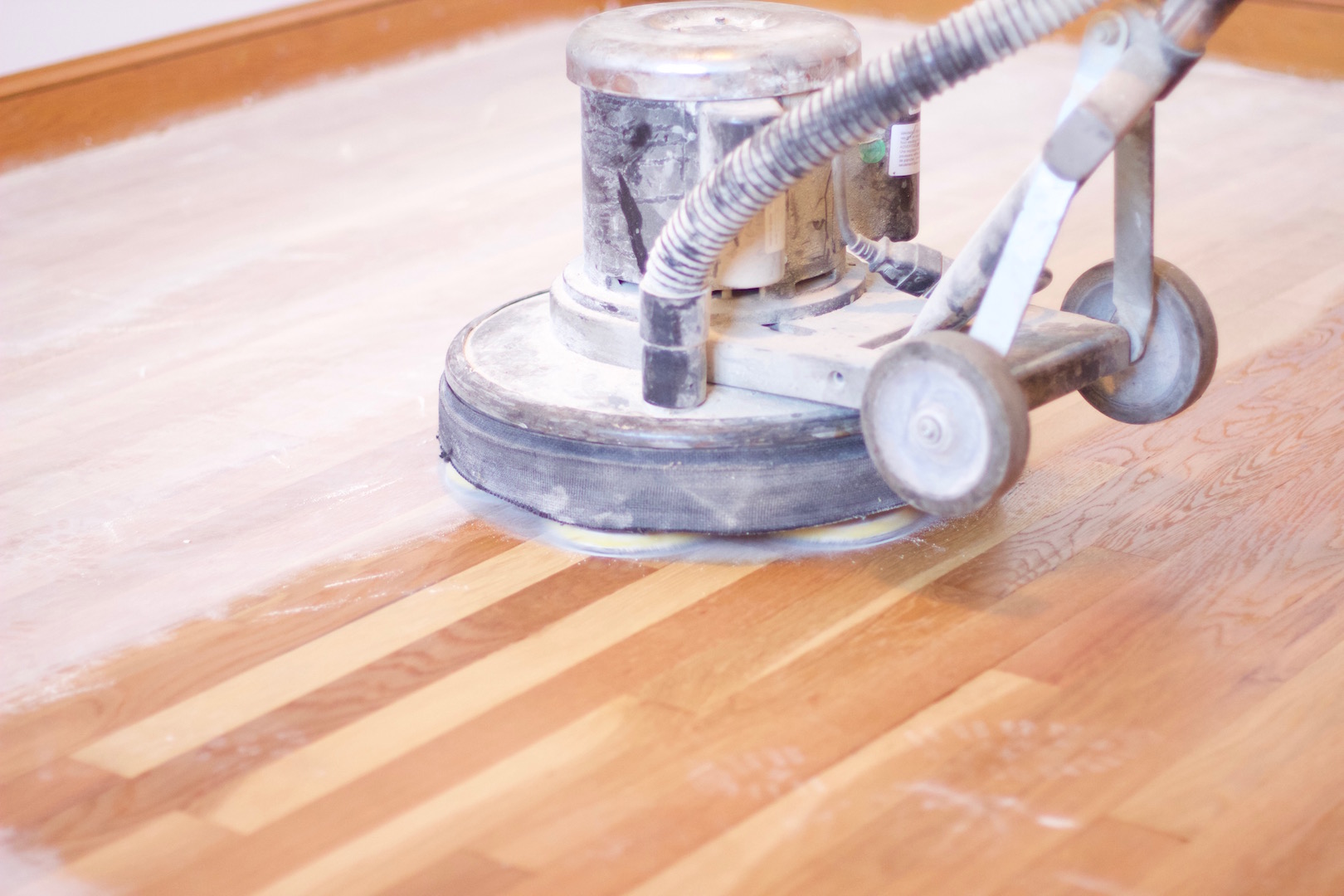 Intercoat abrasion with a multi-disc and 220 grit sandpaper Intercoat abrasion with a multi-disc and 220 grit sandpaper |
|
|
|
Step 5: Respect cure time
Light foot traffic may be possible after ~24 hours (product-dependent), but full cure takes longer. Avoid rugs too early or you can trap solvents and create “tan lines” or texture issues.
Lynn, MA / Boston & vicinity
If your job involves dark stain, tight edges (built-ins/toe-kicks), humidity issues, or you want the cleanest professional outcome, it’s often cheaper to hire a pro than to fix a failed finish later. Not sure, if, we serve your area. Give us a call and we can tell you.
Call G & S Floor Service (Lynn, MA): 781-632-1018 or Email
Bona Woodline® Polyurethane (What to Expect and When It’s a Good Choice)
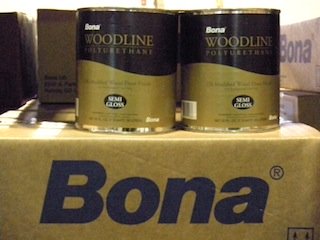 Oil base polyurethane floor finish
Bona Woodline® Polyurethane wood floor finish is a premium oil-modified polyurethane used on residential and some commercial wood floors when you want a traditional oil-finish look with dependable protection. Homeowners often choose an oil-modified polyurethane like Woodline when they prefer a slightly warmer tone than most water-based finishes provide, or when they want a finish that levels nicely and feels familiar underfoot.
One of the biggest reasons oil-modified polyurethane systems perform well is forgiveness during application. Oil-based finishes typically have a longer workable “open time” than many waterborne products, which helps reduce the risk of dry edges and lap marks—especially in rooms where maintaining a wet edge is challenging. That said, results still depend on fundamentals: consistent sanding quality, clean vacuuming and tacking, and applying the finish at the correct coverage so it can level properly.
Because Woodline is oil-modified, it will generally add warmth (ambering) to the wood and can continue to yellow slightly over time. That’s a benefit for many classic interiors and for species where you want richer depth, but it may not be ideal if your design goal is a very pale, “raw” look. If you’re comparing looks, always judge a sample in the same lighting your floor lives in—daylight, evening ламps, and adjacent room light can change perception dramatically.
For best results with Bona Woodline, follow a system approach: confirm compatibility with any stain used, respect dry times, and abrade between coats properly. Many finish complaints come from rushing recoat windows or from contamination (dust, pet hair, HVAC airflow, or residue on the floor) rather than from the finish itself. Also remember that “dry to touch” is not the same as “fully cured.” Like most oil-modified polys, the finish continues hardening for weeks, so protect the floor early—avoid dragging furniture, use felt pads, and wait before placing rugs.
If your project is technical—dark stain, large open areas where lap lines are a risk, or you need a clean, professional look without rework—consider bringing in a pro who applies Bona systems regularly. In Lynn, MA and Boston’s North Shore, you can call G & S Floor Service at 781-632-1018 to discuss your floor and get a clear plan before the first coat goes down.
How to Choose a Bona Woodline Flooring Contractor (and Avoid Costly Redos)
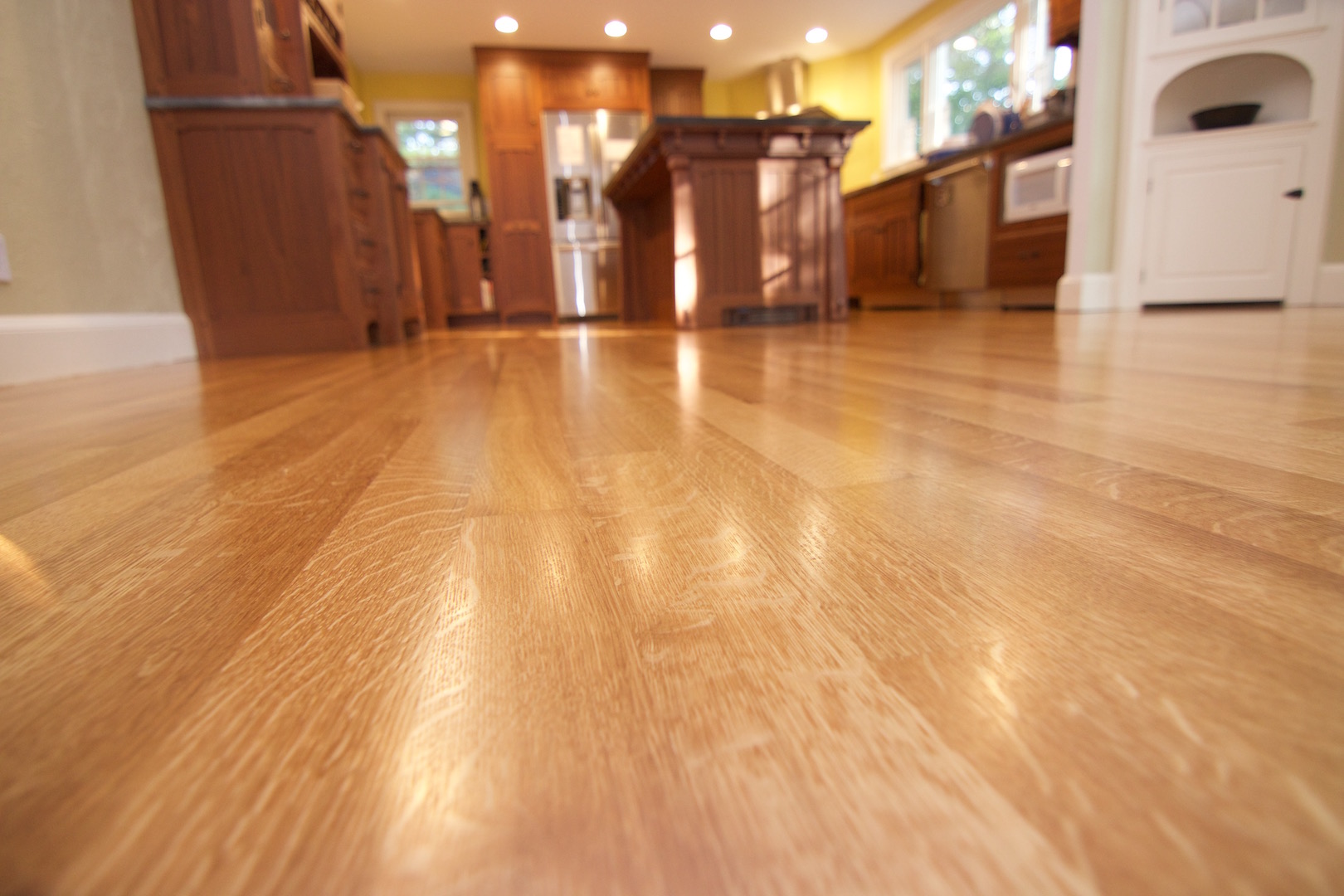 Oil base polyurethane finish applied with 120 micron microfiber roller
Bona Woodline® Polyurethane wood floor finish is a premium oil‑modified floor finish, and it can look fantastic—if the sanding quality, prep, and application process are professional-grade. Choosing the right contractor matters as much as choosing the product.
Start by asking whether the contractor regularly uses Bona systems, not just “has used it once.” A pro who runs Woodline often will understand open time, coat thickness, between‑coat abrasion, and how to prevent common issues like lap marks, debris nibs, and uneven sheen—especially in satin finishes.
Next, evaluate their sanding standards. Ask how they prevent edger swirl marks, how they blend the edge zone into the field, and what their final prep steps are (vacuuming, tack methods, and containment). Great finish begins with great sanding—no topcoat can hide poor scratch patterns.
Then, confirm they will provide a written scope. It should clearly state: number of coats, sheen, prep steps, repairs (if any), between‑coat abrasion, and cure-time guidance (when you can walk on it, move furniture back, and place rugs). If they can’t describe cure and re-entry timing confidently, that’s a red flag.
Finally, check for dust control and jobsite protection. Even oil-modified finishes benefit from cleaner environments—less airborne dust means a smoother final coat and fewer imperfections.
Resource: NWFA.org
Need a Bona Woodline Pro in the Lynn, MA / Boston Area?
If you’re in Lynn, MA or Boston and vicinity and want a contractor who understands professional sanding and Bona finishing systems,
call or text G & S Floor Service at 781‑632‑1018 or email to discuss your project and request a quote.
Gandswoodfloors professional development - About us


Anti Spam Policy - Copyright - Linking - Privacy - Terms - Website Disclaimer
Copyright 2026. All rights reserved gandswoodfloors.com
Contact:
G & S Floor Service - Sye Phommachanh
Lynn,Ma. 01904 - Phone: (781)-632-1018