Basement Concrete Subfloor Prep & Installation
for LVP and Engineered Hardwood (Boston + North Shore)
Basement Concrete Subfloor Prep & Installation - Basement flooring projects succeed or fail before the first plank goes down. On concrete slabs, long-term performance depends on three things:
1) Moisture control (vapor drive through concrete is common in basements)
2) Flatness and surface prep (especially for click/lock products)
3) Correct install method (floating vs glue-down) matched to slab conditions
This guide explains what “proper prep” means for LVP and engineered hardwood over basement concrete—and when epoxy moisture mitigation is the right solution.
If you’re in Boston and vicinity / the North Shore (Lynn, Salem, Peabody, Revere, Swampscott, Marblehead, Lynnfield, Danvers, Beverly), the fastest way to avoid surprises is an on-site evaluation of your slab before you choose materials.
What “Basement Subfloor Prep” Means on Concrete
Concrete isn’t wood, but it still moves moisture. Prep typically includes:
- Moisture evaluation (not guesswork)
- Surface profiling (clean, sound, and ready to bond)
- Crack and joint treatment (so movement/telegraphing is addressed)
- Flattening / leveling (so floors don’t click, rock, separate, or fail)
- A moisture strategy that matches your product and install method simple vapor retarder (when allowed)or epoxy moisture mitigation (when moisture is too high for standard installs)
Basement Concrete Subfloor Prep steps
Step 1 — Start With Moisture (Basement Rule #1) Moisture control vs moisture mitigation
A slab can look dry and still be emitting moisture vapor. Common warning signs include:
- Musty odor
- Condensation (pipes/ducts or on slab edges)
- Efflorescence (white powdery salts)
- Past water intrusion or frequent high humidity
- Moisture control: improve drainage, gutters, grading, sump, dehumidification, HVAC balance
- Moisture mitigation: install systems that block or manage vapor—most commonly epoxy moisture mitigation under certain flooring systems
Step 2 — Concrete Surface Prep (The Part That Protects Your Warranty)
Before leveling compounds, adhesives, or moisture systems can work, the slab must be suitable:
- Remove contaminants: paint, sealers, curing compounds, old adhesive residues
- Fix weak surface layers: dusting, laitance, spalling
- Mechanically profile as needed (many failures are “bonded to dirt,” not concrete)
This is especially important in basements where older slabs may have coatings or unknown history.
Step 3 — Flatness Matters More Than “Level” (Especially for LVP)
For click/lock floating floors, flatness prevents:
- broken locking joints
- plank separation
- hollow spots and movement
- premature wear at edges
If the slab is uneven, the solution is typically:
- targeted patching/grinding for small areas, or
- self-leveling underlayment (SLU) for broader correction (with correct primer/system)
LVP Over Basement Concrete: Floating vs Glue-Down
Floating (click/lock) LVPGlue-down LVP
Best when:
- the slab is very flat
- the LVP product is rated for basements
- the underlayment/vapor retarder is approved for your product
Common failure mode: slab isn’t flat enough → joints fail.
Best when:
- the slab is properly prepped for adhesion
- moisture conditions are verified
- adhesive system matches slab moisture and pH requirements
Common failure mode: poor surface prep or moisture above spec → adhesive release.
Engineered Hardwood Over Basement Concrete: What Makes It Work
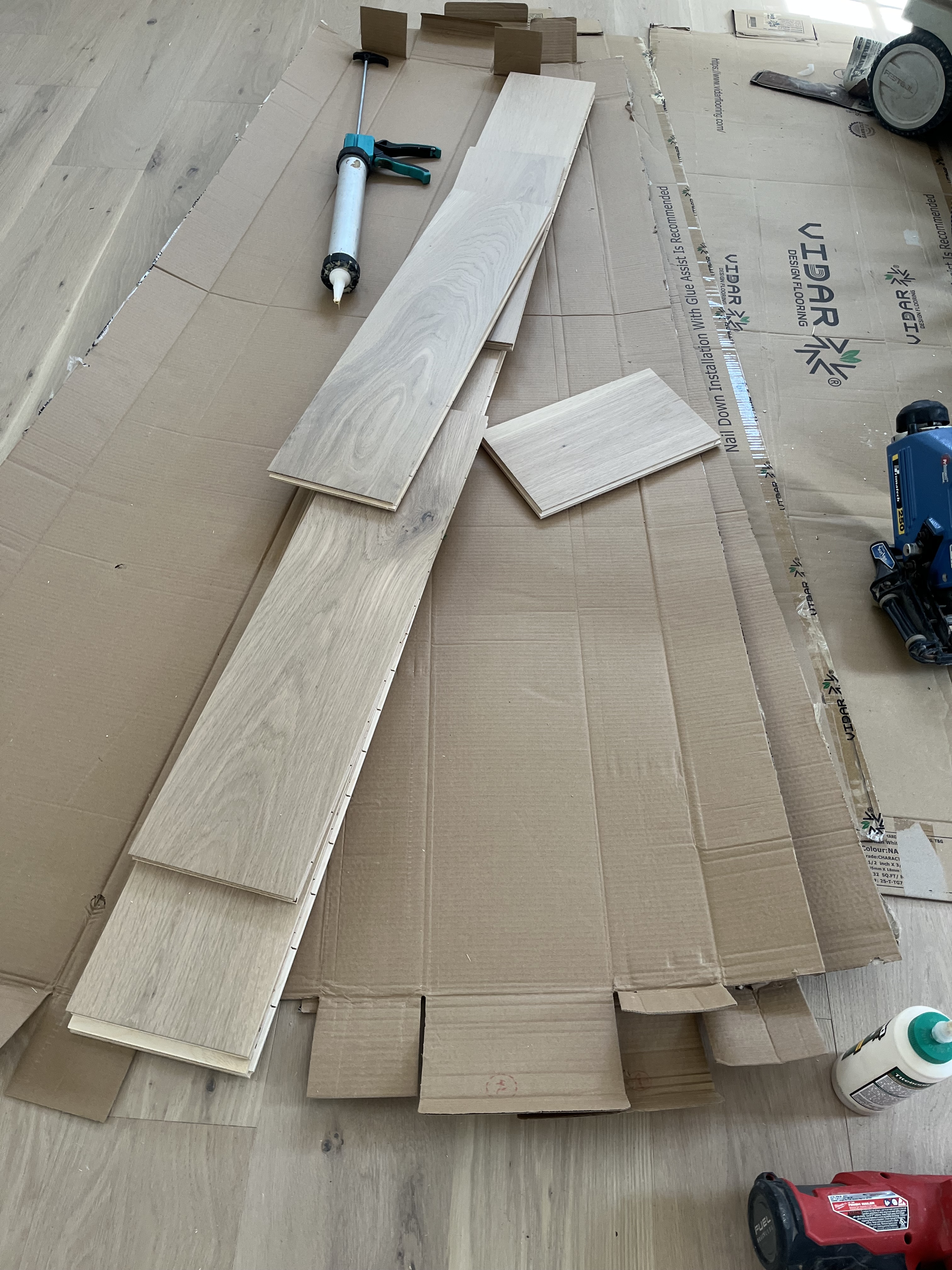
Engineered hardwood can be an excellent “real wood” basement option when installed as a system, not a guess.
Two common approaches:
- Floating engineered hardwood (flatness still critical)
- Glue-down engineered hardwood (prep + moisture verification are critical)
Basement risks engineered wood is sensitive to:
- chronic high humidity
- slab vapor transmission
- seasonal swings
A good plan includes slab evaluation plus a moisture strategy (sometimes including epoxy mitigation).
When Epoxy Moisture Mitigation Is the Right Call
Epoxy moisture mitigation is typically considered when:
- slab moisture levels exceed the flooring/adhesive manufacturer’s limits
- you want a more robust risk-reduction strategy for a basement install
- you’re doing glue-down systems that need a controlled substrate
Important: epoxy mitigation is not a “one-product fix.” It works when the full system is followed:
- correct slab prep/profile
- correct product selection
- correct application thickness and coverage
- correct compatibility with leveling compounds/adhesives/top layers
Common Basement Concrete Prep Mistakes
- Skipping moisture evaluation because “it feels dry”
- Installing over paint/sealer without proper mechanical removal
- Using underlayment to “hide” uneven concrete (it usually doesn’t)
- Pouring SLU (self-leveling underlayment) without proper primer or prep
- Choosing floating vs glue-down based on preference instead of slab realities
- Ignoring crawlspace/basement humidity and seasonal swings
Resource: NWFA.org
Get a Basement Subfloor Readiness Diagnostic (Boston + North Shore)
If you’re planning LVP or engineered hardwood over a basement slab, we can evaluate:
- visible moisture risk indicators
- slab condition and prep needs
- likely leveling requirements
- best-fit install method (floating vs glue-down)
- whether epoxy moisture mitigation is warranted
Book a Free On-Site Diagnostic
We’ll assess your basement slab for:
- visible moisture-risk indicators (musty odor, condensation, efflorescence)
- cracks, surface condition, and prep needs (grinding/patching/leveling)
- whether floating vs glue-down installation is the better fit for your slab
Basement Concrete Subfloor Prep & Installation (LVP + Engineered Hardwood) — Boston + North Shore
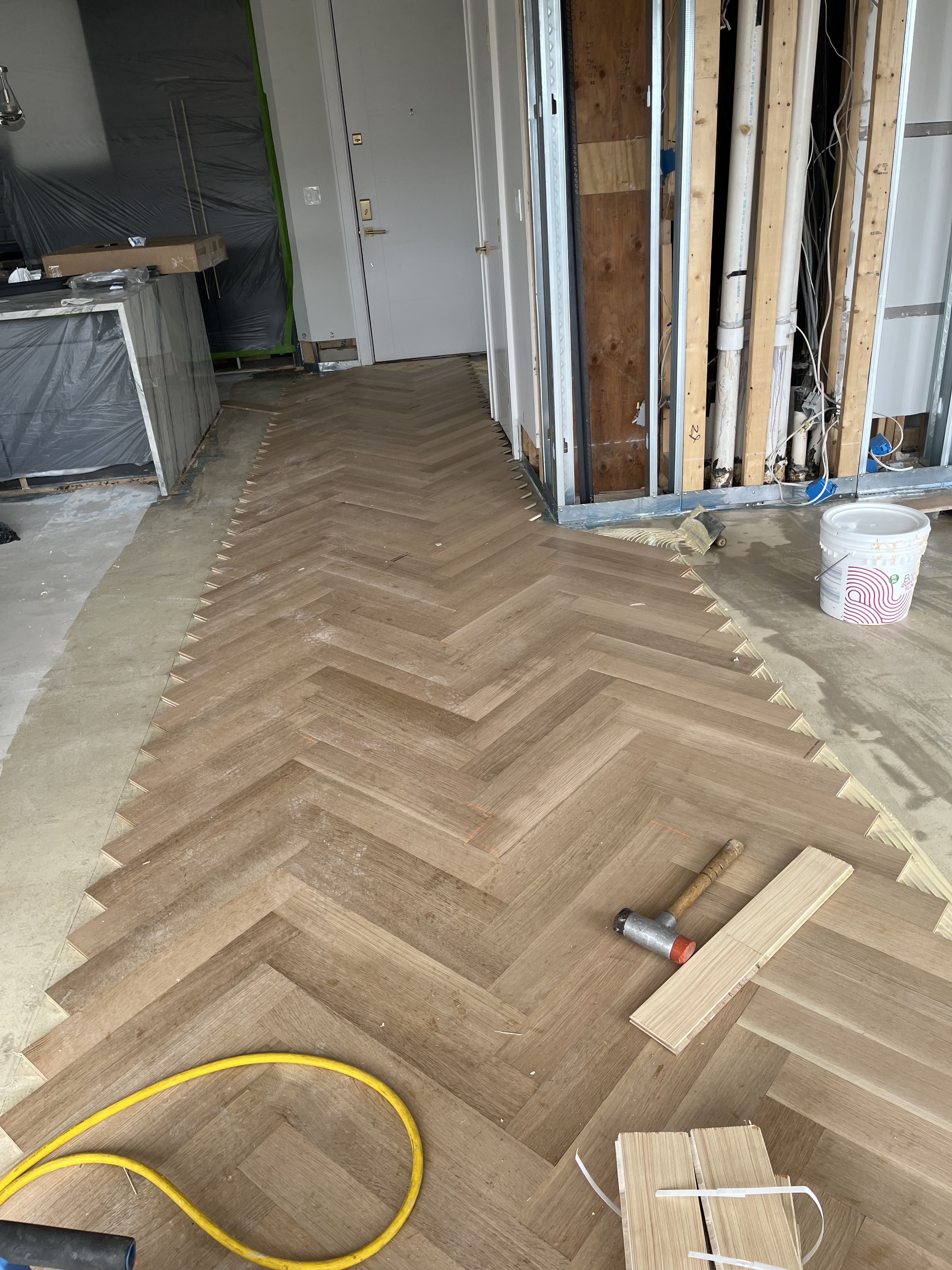
Basement floors fail most often because of moisture, uneven concrete, or poor prep—not because of the flooring itself. If you’re planning LVP or engineered hardwood over a basement slab, start with a professional look at the concrete first.
G & S Floor Service provides basement concrete subfloor prep + installation for homeowners in Boston and vicinity.
Book Free Diagnostic
Call 781-632-1018
Book a Free Basement Floor Diagnostic (On-Site)Mechanical testing (paid — credited)
We’ll come to your home and assess:
- concrete condition (cracks, spalling, dusting, contamination)
- obvious flatness issues (high/low areas, transitions)
- visible moisture risk indicators (musty odor, condensation, efflorescence)
- which install approach fits best: floating or glue-down
If your project requires it, we offer paid mechanical testing (moisture/flatness as appropriate).
If you hire us for prep + install, we credit the testing fee toward your project.
“What we install”
We install:
- LVP (Luxury Vinyl Plank) — floating or glue-down
- Engineered hardwood — floating or glue-down
Solid hardwood in basements: considered case-by-case after evaluation/testing, because basement conditions vary.
Carpet: we don’t install carpet, but we can prepare the concrete subfloor (patching/leveling/moisture planning) for your carpet installer.
We don’t guess on basements. We start with a free on-site diagnostic and recommend mechanical testing only when it materially affects the prep plan or protects the install.
G & S Floor Service — Lynn, MA
Serving Boston and vicinity
Call 781-632-1018 · Book Free Diagnostic
FAQ
Do I need epoxy moisture mitigation in my basement?
Not always. It depends on slab conditions, flooring type, and manufacturer limits. Basements vary widely—even within the same neighborhood.
Is floating LVP better than glue-down in a basement?
Neither is universally “better.” Floating needs excellent flatness; glue-down demands excellent surface prep and moisture compliance.
Can engineered hardwood be installed on a basement slab?
Often yes—with proper prep and moisture strategy. Product choice and install method matter.
Why does basement flooring fail even when the product is “waterproof”?
“Waterproof” doesn’t automatically mean the slab is dry enough, flat enough, or compatible with the adhesive/underlayment system.
G & S Floor Service (Boston + North Shore)
781-632-1018 · Book Free Diagnostic
Gandswoodfloors professional development - About us



Anti Spam Policy - Copyright - Linking - Privacy - Terms - Website Disclaimer
Copyright 2026. All rights reserved gandswoodfloors.com
Contact:
G & S Floor Service - Sye Phommachanh
Lynn,Ma. 01904 - Phone: (781)-632-1018