Concrete Floor Leveling for Hardwood Floors (Boston + North Shore)
Concrete floor leveling for hardwood floors - Hardwood floors need a subfloor that’s flat, solid, and properly prepared. If your concrete slab has dips, humps, ridges, or cracks, it can lead to hardwood issues like gapping, squeaks, hollow spots, movement, and premature wear.
G & S Floor Service provides professional concrete floor leveling for hardwood floors throughout Boston and vicinity—so your hardwood installs correctly and stays stable long-term.
Book Free Diagnostic
Or call now: 781-632-1018
Concrete grinding and leveling are the two steps that decide whether a hardwood floor feels premium (quiet, solid, seamless) or becomes a long-term headache (movement, gaps, squeaks, hollow spots).
Why concrete prep matters for hardwood floors Hardwood—especially engineered hardwood installed over concrete—demands a subfloor that’s flat, clean, and structurally sound. Concrete slabs often have high ridges, old adhesive residue, trowel marks, cracks, or low “birdbath” spots. Those imperfections can transfer stress into the flooring system and cause premature wear or visible problems after installation.
What concrete grinding does
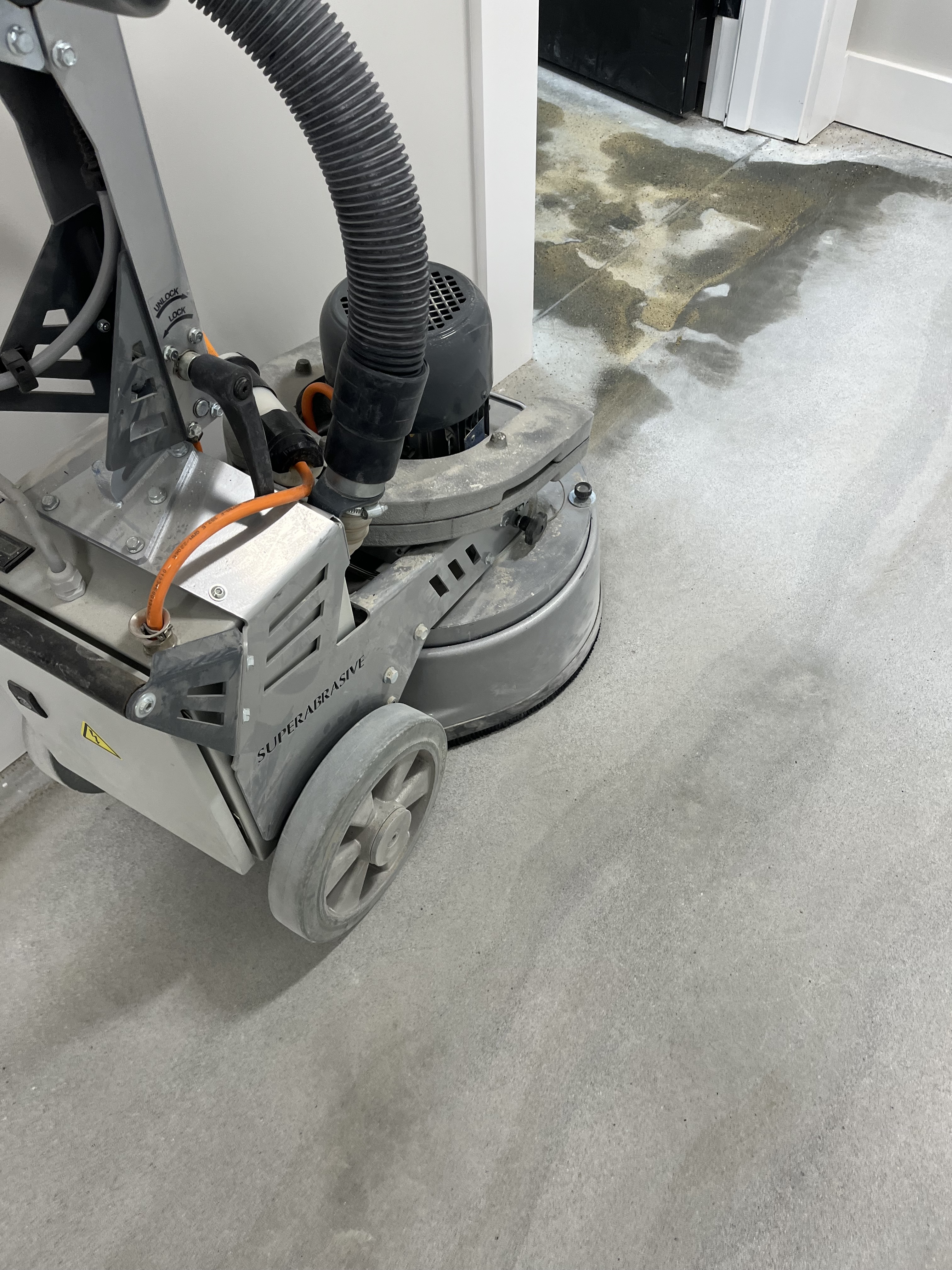
Concrete grinding corrects high spots and removes surface contaminants that interfere with bonding. It’s commonly used to:
- knock down humps and ridges
- remove paint, thinset, or old glue
- improve adhesion for patch products or glue-down hardwood systems
Grinding is targeted, controlled work—done to achieve flatness without creating new dips.
What leveling does (and when it’s needed)
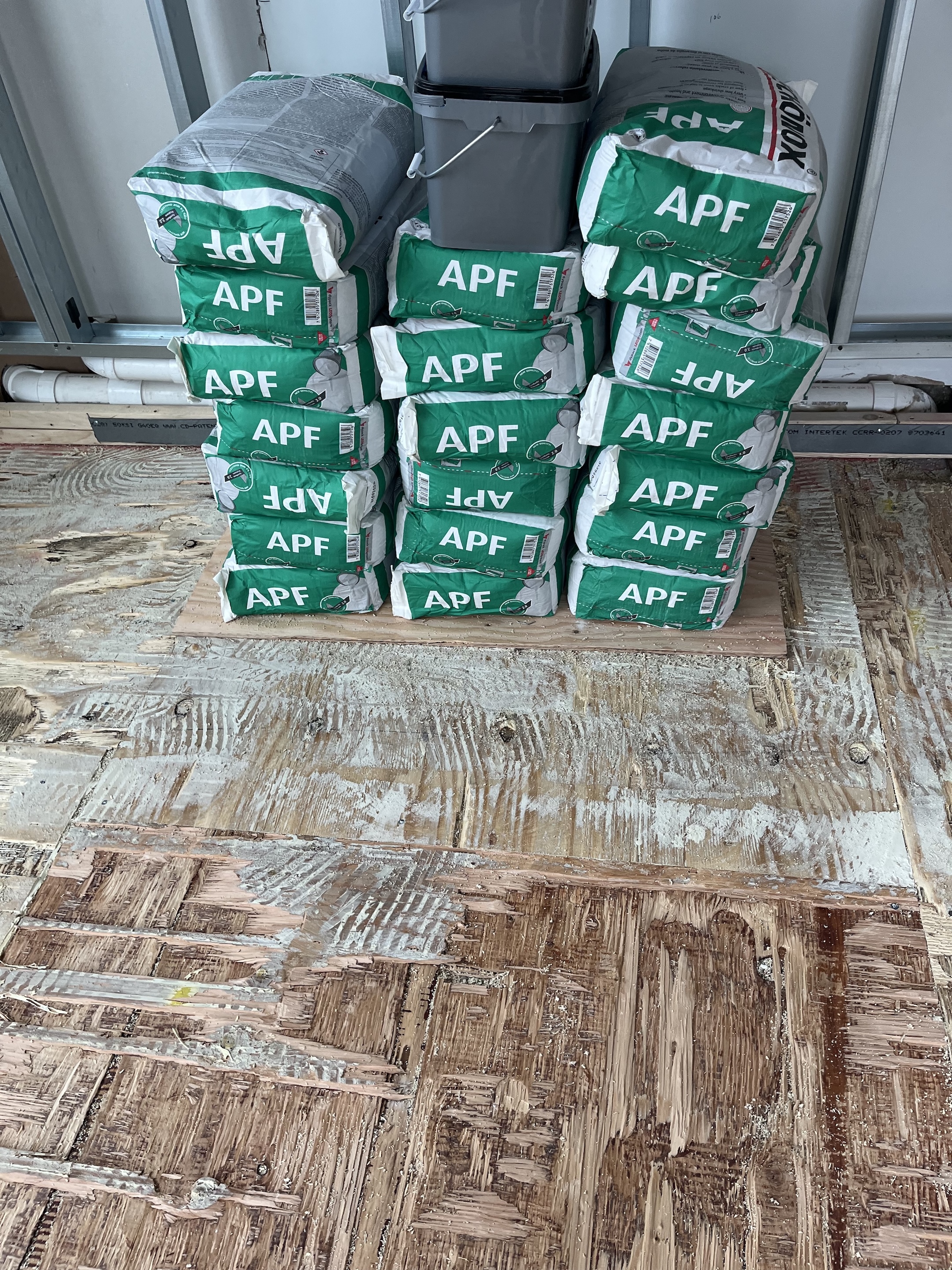
Leveling corrects low spots and uneven areas so the floor system has consistent support.
Depending on the slab and hardwood install method, leveling may include:
- patching and feathering localized dips
- self-leveling underlayment (SLU) for broader flatness correction
- crack preparation so repairs don’t telegraph through the finished floor
The payoff
Proper grinding and leveling helps prevent:
- hollow sounds and soft spots underfoot
- click-joint stress (for floating engineered hardwood)
- adhesive failures (for glue-down engineered hardwood)
- uneven transitions and trim gaps
If you’re planning hardwood over concrete, start with a professional slab evaluation. It’s the fastest way to protect your investment—and the finished look you’re expecting.
When Concrete Leveling Is Needed Before Hardwood Installation
Homeowners commonly reach out when they notice:
- Uneven slab areas that make flooring feel wavy or unstable
- Transitions between rooms that create a lip or ridge
- Cracks or patched areas that may telegraph through the finished floor
- Plans to install engineered hardwood over concrete (floating or glue-down)
- A desire for solid hardwood “feel” (quiet, firm underfoot) without bounce or hollow sounds
Why Flatness Matters for Hardwood Floors (Not Just “Level”)
Many floors aren’t perfectly level—and that’s often OK. The real problem is a slab that isn’t flat.
For hardwood, poor flatness can cause:
- Movement that stresses joints and fasteners
- Hollow spots (especially with glue-down engineered hardwood)
- Noise (squeaks/pops) from flexing and voids
- Visual issues (lippage, uneven reveals, baseboard gaps)
We focus on creating a slab surface that’s install-ready for your specific hardwood system.
Concrete Prep & Leveling Services for Hardwood Floors
Concrete floor grinding (high spot correction)Low spot filling and patchingSelf-leveling underlayment (SLU) installation (when needed)Crack and surface preparation
We grind down humps and ridges that prevent a flat hardwood install—especially critical at seams, patched areas, and transitions.
We repair dips and birdbaths so the slab supports the floor evenly.
For broader unevenness, we install self-leveling underlayment as part of a complete prep system (including the correct primer and surface prep).
We address cracks and surface defects so they don’t undermine the install or show through later (approach varies based on hardwood type and install method).
Hardwood Over Concrete: What We Install (And How We Decide)
Hardwood over concrete is usually either:
- Engineered hardwood (floating) — requires excellent flatness and correct underlayment/vapor strategy
- Engineered hardwood (glue-down) — requires excellent surface prep and moisture compliance for long-term bond strength
- Solid hardwood — typically case-by-case over concrete, depending on the subfloor build-up system and basement conditions
During your diagnostic, we’ll explain which approach best matches your slab and goals.
Resource: NWFA.org
Our Process: concrete floor leveling for hardwood floors
- Book a free on-site diagnostic
We evaluate slab flatness concerns, cracks, and visible moisture-risk indicators. - Get a clear prep plan + quote
You’ll know what needs to be done before hardwood installation starts. - Perform the leveling and prep work
Grinding, patching, and/or self-leveling underlayment—based on the slab and the hardwood installation method. - Install (or deliver an install-ready slab)
If you’re hiring us for the full project, we move from prep to installation seamlessly.
Service Area (Boston and Vicinity / North Shore)
Based in Lynn, MA, serving Boston and vicinity, including:
Lynn, Salem, Peabody, Revere, Swampscott, Marblehead, Lynnfield, Danvers, and Beverly.
Not sure if you’re in range? Call 781-632-1018.
FAQs
Can hardwood floors be installed over concrete?Do you fix small areas or only whole slabs?Will leveling fix squeaks or movement?
Yes—most commonly with engineered hardwood (floating or glue-down). The slab must be properly prepped and moisture-appropriate for the system being installed.
Both. Sometimes a targeted repair is enough; sometimes the slab needs broader flattening. We’ll confirm during your diagnostic.
If the cause is uneven support or hollow spots under a floor system, correcting flatness and prep issues can significantly reduce movement and noise—especially for engineered hardwood installs.
Book Free Diagnostic
Concrete leveling is the hidden step that determines whether a hardwood floor feels premium—or problematic.
G & S Floor Service
Call 781-632-1018 · Book Free Diagnostic
Gandswoodfloors professional development - About us



Anti Spam Policy - Copyright - Linking - Privacy - Terms - Website Disclaimer
Copyright 2026. All rights reserved gandswoodfloors.com
Contact:
G & S Floor Service - Sye Phommachanh
Lynn,Ma. 01904 - Phone: (781)-632-1018